
Do you need a rain gauge for your garden? Yes — if you're growing tomatoes, vegetables, or any plants with specific water requirements, guessing how much rain fell is costing you yield and plant health. The Stratus Precision Rain Gauge measures rainfall to 0.01-inch accuracy, is endorsed by NOAA, and is the official gauge of the CoCoRaHS weather observation network. It tells you exactly how much water your garden received so you never overwater or underwater again. Made in USA.
Tom's Quick Answer: I guessed at rainfall for 20 years. I overwatered after light showers and underwatered after what felt like heavy rain. A $20 rain gauge fixed both problems permanently. Mount it, check it after every rain, and adjust your Tomato Crater watering schedule accordingly. That's it.
Tom's Real-World Advice
Most gardeners water on a schedule — Monday, Wednesday, Friday, regardless of what fell from the sky. That's how you get blossom end rot in a wet week and drought stress in a dry one. The plants don't care about your schedule. They care about how much water is actually in the root zone.
The Stratus gauge changed how I think about watering entirely. Now I check it every morning. If it rained 0.8 inches overnight, my Tomato Crater plants don't need supplemental water that day. If it rained 0.2 inches, they do. That's a decision I can make in 10 seconds with a Stratus gauge. Without it, I'm guessing — and guessing costs yield.
I've been a CoCoRaHS observer for three years now. My data goes to NOAA and helps local farmers, emergency managers, and water utilities understand what's actually falling in my area. A $20 gauge and 2 minutes a day. That's the whole commitment.
Why Rainfall Guessing Hurts Your Garden
- Overwatering after light rain. A shower that feels substantial often delivers less than 0.25 inches — not enough to skip supplemental watering for tomatoes needing 1–2 inches per week.
- Underwatering after heavy rain. A hard 20-minute downpour can deliver 1.5 inches — more than enough for the week, but most gardeners water anyway out of habit.
- Blossom end rot. Caused by inconsistent calcium uptake triggered by irregular watering. Stratus + Tomato Crater together eliminate the inconsistency.
- Fruit cracking. Dry period followed by sudden heavy watering causes rapid fruit expansion and cracking. Tracking rainfall prevents the dry periods that set this up.
- Wasted water. Overwatering is the most common garden mistake. A rain gauge pays for itself in water savings in a single season.
What Makes Stratus Different from a Standard Rain Gauge
| Feature | Stratus Precision Rain Gauge | Standard Hardware Store Gauge |
|---|---|---|
| Precision | 0.01-inch increments | Typically 0.1-inch increments |
| NOAA endorsed | ✅ Yes | ❌ No |
| CoCoRaHS official gauge | ✅ Yes | ❌ No |
| Tube diameter | 4-inch wide-mouth opening | Typically 1–2 inch |
| Accuracy in light rain | ✅ Excellent | ❌ Poor — misses light events |
| Made in USA | ✅ Yes | Varies |
| Measurement tube | Magnified inner tube for easy reading | Standard tube |

Stratus + Tomato Crater: The Precision Watering System
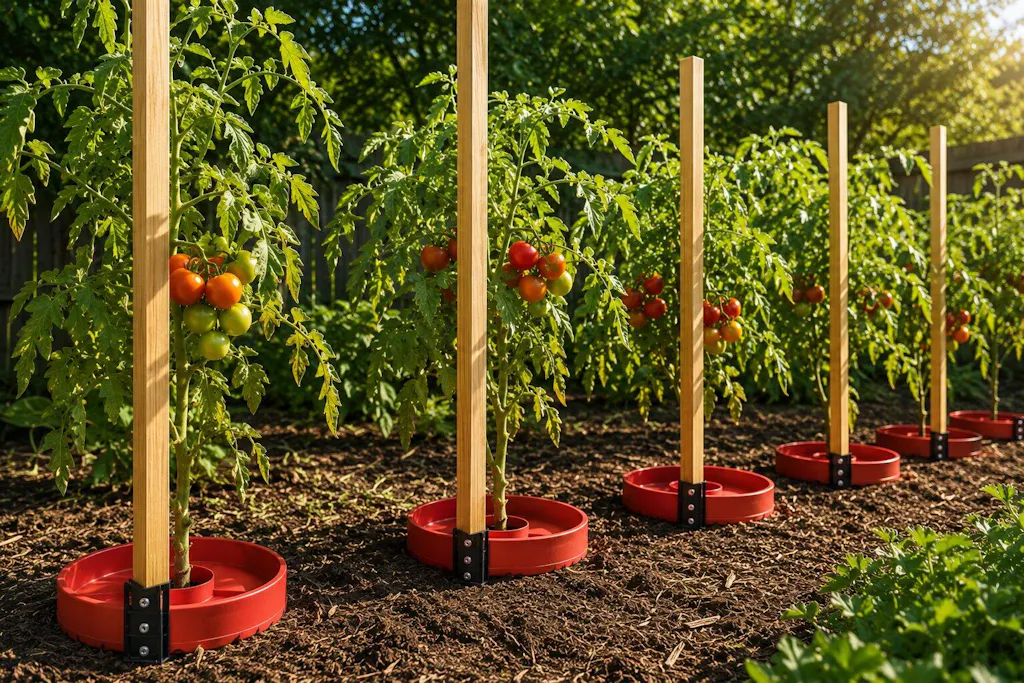
Stratus and Tomato Crater are a natural pairing. Tomato Crater delivers water precisely to the root zone. Stratus tells you exactly how much nature already delivered. Together they give you complete control over root zone moisture — the single most important factor in tomato yield and health.
Tom's rule: tomatoes need 1–2 inches per week. Check Stratus after every rain. Subtract rainfall from the weekly target. Deliver the remainder through the Tomato Crater moat. Never guess, never overwater, never underwater.
How to Mount Your Stratus Rain Gauge
- Choose an open location. Mount at least 10 feet from any structure, tree, or obstruction that could block or deflect rainfall. The gauge should have a clear view of the sky.
- Mount at the right height. CoCoRaHS standard is 1–3 feet above the ground. Too high and wind affects readings; too low and splash distorts them.
- Level the gauge. A tilted gauge gives inaccurate readings. Use a level and adjust the mounting bracket until the gauge sits perfectly vertical.
- Check after every rain event. Read the inner measuring tube at eye level. Record the measurement, then empty the gauge for the next event.
- Empty within 24 hours. Evaporation affects readings if you wait too long after a rain event to measure.
Works for the Whole Garden
One Stratus gauge tracks rainfall for your entire garden — tomatoes, peppers, squash, cucumbers, melons, strawberries, flower beds, and lawn. Every plant in your yard benefits from knowing exactly how much rain fell. One gauge, one reading, complete picture.
FAQs
What is the most accurate rain gauge for home gardeners?
The Stratus Precision Rain Gauge is the most accurate consumer rain gauge available — measuring to 0.01-inch precision with a 4-inch wide-mouth opening. It is NOAA endorsed and the official gauge of the CoCoRaHS weather observation network.
How often should I check my rain gauge?
After every rain event, ideally within 24 hours. Evaporation can affect readings if you wait too long. Tom checks his every morning as part of his garden routine.
What is CoCoRaHS?
CoCoRaHS (Community Collaborative Rain, Hail and Snow Network) is a volunteer weather observation network that collects precipitation data for NOAA, the National Weather Service, and local water utilities. The Stratus gauge is the official CoCoRaHS gauge. Anyone can join and contribute data.
How much rain do tomatoes need per week?
Tomatoes need 1–2 inches of water per week during the growing season, increasing to 1.5–2 inches during flowering and fruit set. Use Stratus to track rainfall and Tomato Crater to deliver supplemental water directly to the root zone.
Is the Stratus Rain Gauge Made in USA?
Yes. The Stratus Precision Rain Gauge is manufactured in the United States.
More Stratus Resources: Stratus Rain Gauge Hub | Shop Stratus Rain Gauge | Shop Tomato Crater | Learn From Tom