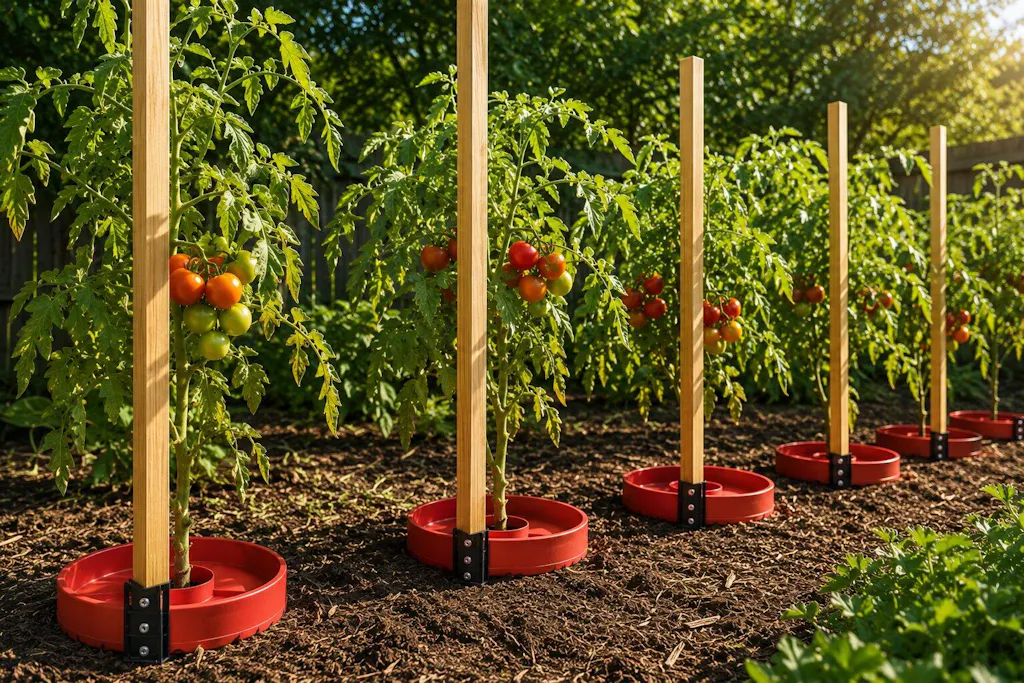

A tomato trellis that falls over in July — when your plants are 5 feet tall and loaded with fruit — is one of the most frustrating things that can happen in a garden. The plants get damaged, the fruit bruises, and you spend an afternoon trying to prop everything back up with whatever you can find.
The fix isn't more stakes. It's the right anchor system from the start.
Why Tomato Trellises Fail Mid-Season
Most tomato trellis failures happen in July and August — not because the trellis was poorly built, but because the load it's carrying increases dramatically as the season progresses.
In May, a tomato plant is 18 inches tall and weighs almost nothing. By July, an indeterminate variety can be 6 feet tall, carrying 10–15 pounds of fruit, with a full canopy that catches wind like a sail. The anchor system that seemed fine in spring is now completely overwhelmed.
The three load factors that take down tomato trellises:
- Plant weight — fruit load on indeterminate varieties peaks in midsummer and can exceed 20 lbs per plant
- Wind load — a full tomato canopy has significant surface area; a 20 mph gust creates substantial lateral force on the trellis
- Soil softening — summer rain and irrigation soften the soil around stakes, reducing friction grip exactly when load is highest
Types of Tomato Trellis Anchor Systems
The Florida Weave (String Trellis)
The Florida weave uses two posts at each end of a row with twine woven back and forth between them as the plants grow. It's the most common commercial tomato trellis system and works well — but only if the end posts are properly anchored. The entire tension of the string system transfers to those two end posts.
Anchor requirement: End posts need deep anchoring (18"+ into native soil) and ideally a diagonal brace or angled anchor on the outward-facing side to resist the inward pull of the string tension.
The T-Post Trellis
T-posts driven into native soil are the most secure option for permanent or semi-permanent tomato trellises. The T-post's flanged base resists lateral movement better than a round stake. Requires a post driver and enough depth to reach compacted soil.
Best for: In-ground gardens with native soil. Not practical for raised beds or containers.
The Freestanding Panel Trellis
Wire or wood panel trellises that stand independently are popular for home gardens because they're easy to move and reuse. The challenge is anchoring them — they have no posts to drive into the ground, just legs that sit on the soil surface.
Anchor requirement: Ground anchors at each leg, angled outward to resist the direction the panel would tip. This is where a no-dig anchor system like Stake It is the right tool.
The Stake-and-Tie System
Individual stakes driven next to each plant, with the plant tied to the stake as it grows. Simple and effective for determinate varieties. For indeterminate varieties, the stake needs to be long enough (6–8 feet total, with 18"+ in the ground) and sturdy enough to handle full fruit load.
How to Anchor a Tomato Trellis With Stake It
The Stake It® No-Dig Garden Stake Anchor System is designed for exactly this application — securing freestanding garden structures without concrete or digging.
For a freestanding panel trellis:
- Position the panel where you want it
- Drive a Stake It anchor at each leg, angled 15° outward (away from the panel)
- For panels over 4 feet tall, add a second anchor on the opposite side of each leg in a V-configuration
- Check for plumb and adjust before the plants get established
For a Florida weave end post:
- Drive the end post as deep as possible
- Add a Stake It anchor on the outward-facing side, angled away from the row
- This diagonal anchor resists the inward string tension that pulls end posts toward the row

For raised bed trellises, see our guide: Best Post Anchors for Raised Beds →
Timing: When to Anchor Your Tomato Trellis
At planting time — the right answer. Set your anchor system before the plants go in. It's far easier to drive anchors in open soil than to work around established plants.
At first tie — acceptable. When plants are 12–18 inches and you're doing your first tie-up, add anchors at the same time.
After a near-miss — better late than never, but you're now working around established plants and the soil may already be softened from irrigation.
Frequently Asked Questions
What is the best anchor system for a tomato trellis?
For freestanding panel trellises, angled ground anchors at each leg provide the best lateral stability without concrete. For Florida weave systems, anchor the end posts with diagonal bracing or angled ground anchors on the outward-facing side.
How do I keep a tomato trellis from falling over?
Use angled anchors rather than straight stakes — angled anchors resist lateral force (wind and plant weight) while straight stakes only resist downward force. Add anchors before the plants get established, not after the trellis starts leaning.
How deep should tomato trellis posts be anchored?
At least 1/3 of the total post height, ideally 18–24 inches for posts in native soil. In raised beds or loose soil, use angled ground anchors to compensate for reduced soil grip.
Can I anchor a tomato trellis without digging?
Yes. No-dig ground anchor systems like Stake It drive into soil with a mallet and grip laterally without requiring a post hole. They're removable and reusable at the end of the season.
When should I set up my tomato trellis anchor system?
At planting time — before the plants go in. Setting anchors in open soil is far easier than working around established plants, and early anchoring prevents the mid-season failures that happen when load peaks in July and August.
Shop Stake It® No-Dig Ground Anchors →
Complete your raised bed setup: Tomato Crater® Root Zone Watering System — anchor the trellis with Stake It, water at the root with Tomato Crater. Both Made in USA.