

Why Professional Chefs Prefer to Carry Their Own Knives
🔪 Key Takeaways
- Precision matters: Professional chefs rely on familiar knives that match their grip, balance, and cutting style
- Consistency across kitchens: Personal knives ensure the same performance whether in a restaurant, catering event, or culinary school
- Protection is essential: Blade Guard™ prevents edge chipping, handle damage, and accidental injuries during transport and storage
- Not just for pros: Home cooks, culinary students, and caterers all benefit from proper knife protection
- Investment protection: High-quality knives can cost hundreds of dollars—proper guards extend their lifespan by years
A Chef, Their Craft, and Their Most Trusted Tools
When you watch a professional chef prep for the day, it’s rarely the fancy apron or the knife roll that catches your eye first—it’s the care with which they handle their knives. These aren’t just tools; they’re prized instruments, each one chosen for its weight, edge, balance, and story.
It’s no surprise that most chefs prefer to travel with their own knives rather than rely on whatever might be available in a restaurant, culinary school, catering event, or private-chef gig. Their blades define their workflow, their precision, and even their identity in the kitchen.
In this deep dive, we’ll explore why personal knives matter so much to culinary professionals, and how modern accessories like the Blade Guard™ from FLI Products help chefs protect their favorite edges wherever their careers take them. You’ll also find practical links to the Blade Guard™ collection, along with cross-references to complementary FLI tools such as the Cordsafe™ and Flex Strainer™—simple upgrades that improve life both in and out of the kitchen.
Why Chefs Bring Their Own Knives
1. Precision Is Personal
Every chef has a unique prep style—how they hold a knife, the height of their cutting board, the grip pressure they prefer, even the angle at which they push through onions or herbs. A familiar knife becomes an extension of their hand.
A house knife or borrowed kitchen blade rarely offers the same:
-
The balance might feel off.
-
The edge may be dull from misuse.
-
The handle could be too large, too slick, or too lightweight.
A chef’s personal kit ensures every cut is predictable. When you’re working at speed and under pressure, predictability isn’t just a convenience—it’s safety.
2. Consistency Across Every Kitchen
Some environments supply decent knives, but most kitchens rely on a mixed pile of community blades with varying levels of wear. A chef jumping from restaurant to catering tent to private event needs a consistent set of tools.
Carrying their own knives means:
-
They always know the sharpness and maintenance level.
-
They can prep faster with familiar profiles (gyuto, nakiri, paring, boning).
-
They maintain uniform cuts and presentation standards.
For chefs in fast-paced environments, consistency isn’t optional—it’s essential.
3. Pride, Craft, and Culinary Identity
Cooking is deeply personal. Many pros spend years building their knife kit, often adding pieces from Japan, Germany, or custom U.S. makers. These blades often hold sentimental value—from a mentor’s gift to a hard-earned splurge after a promotion.
Just like a musician travels with their instrument, chefs travel with knives that reflect their style, training, and level of expertise.
4. Knife Quality Varies Widely
Not all knives are created equal. Borrowing knives is a gamble—not only with workflow but with safety. Dull knives slip. Bent tips catch. Thick spines fatigue the hand.
High-quality knives from brands like Shun, Wüsthof, Global, Miyabi, or top U.S. makers deliver consistent performance—but only if they’re cared for properly.
Chefs don’t trust that responsibility to chance.
Why Knife Protection Matters: The Problem With Traveling Blades
Professional knives are expensive investments. A single high-end gyuto can cost more than a chef’s weekly paycheck. But when chefs throw their knives into a roll or backpack without proper protection, damage is almost guaranteed.
The Risks Include:
-
Edge chipping when blades knock into each other
-
Handle damage from rough travel
-
Warping or bending from poorly padded rolls
-
Accidents and cuts when reaching blindly into a bag
-
Dull edges caused by friction or cardboard sleeves
This is where Blade Guard™ becomes one of the most important accessories a chef can own.
Blade Guard™: The Modern “Saya” for Every Professional Knife
Chefs used to rely on wooden sayas or ill-fitting plastic sheaths. But today’s kitchens require faster, safer, more durable protection.
The Blade Guard™ collection from FLI Products is built for real-world kitchen mobility:
-
Universal sizing for chef knives, santokus, gyutos, paring knives, and slicers
-
Durable, flexible polymer construction that protects edges without scratching
-
Secure, slip-resistant channels that stay put in knife rolls
-
Easy-to-clean materials suitable for commercial kitchen environments
-
Travel-ready design that protects blades in cars, gigs, and culinary-school kits
When a chef uses Blade Guard™, they’re not only protecting their knives—they’re protecting their fingers, coworkers, and reputation for professionalism.
Explore the full Blade Guard™ collection for chef’s knives, santokus, and more.
Blade Guard knife blade edge guard overview
The Psychology Behind a Chef’s Knife Kit
Chefs Bond With Their Blades
A chef’s knife kit represents years of work, growth, and practice. These knives survive mistakes, triumphs, long shifts, and countless dishes. They’re comfort items as much as tools.
Knives Are Career Investments
Chefs often buy knives piece by piece over many years, choosing specific steels and profiles for their culinary style. They’re not casual purchases—they’re capital investments in career development.
Maintaining Respect in a Shared Kitchen
Bringing your own knives shows you’re a serious professional. It communicates:
-
“I care about my craft.”
-
“I know my tools.”
-
“I’m prepared for anything.”
A well-equipped kit—protected with Blade Guard™—signals competence before the first onion is chopped.
Transporting Knives Safely: What Chefs Actually Do
Professional chefs take knife safety on the road seriously. Here’s how most of them travel:
1. Use a Knife Roll or Case
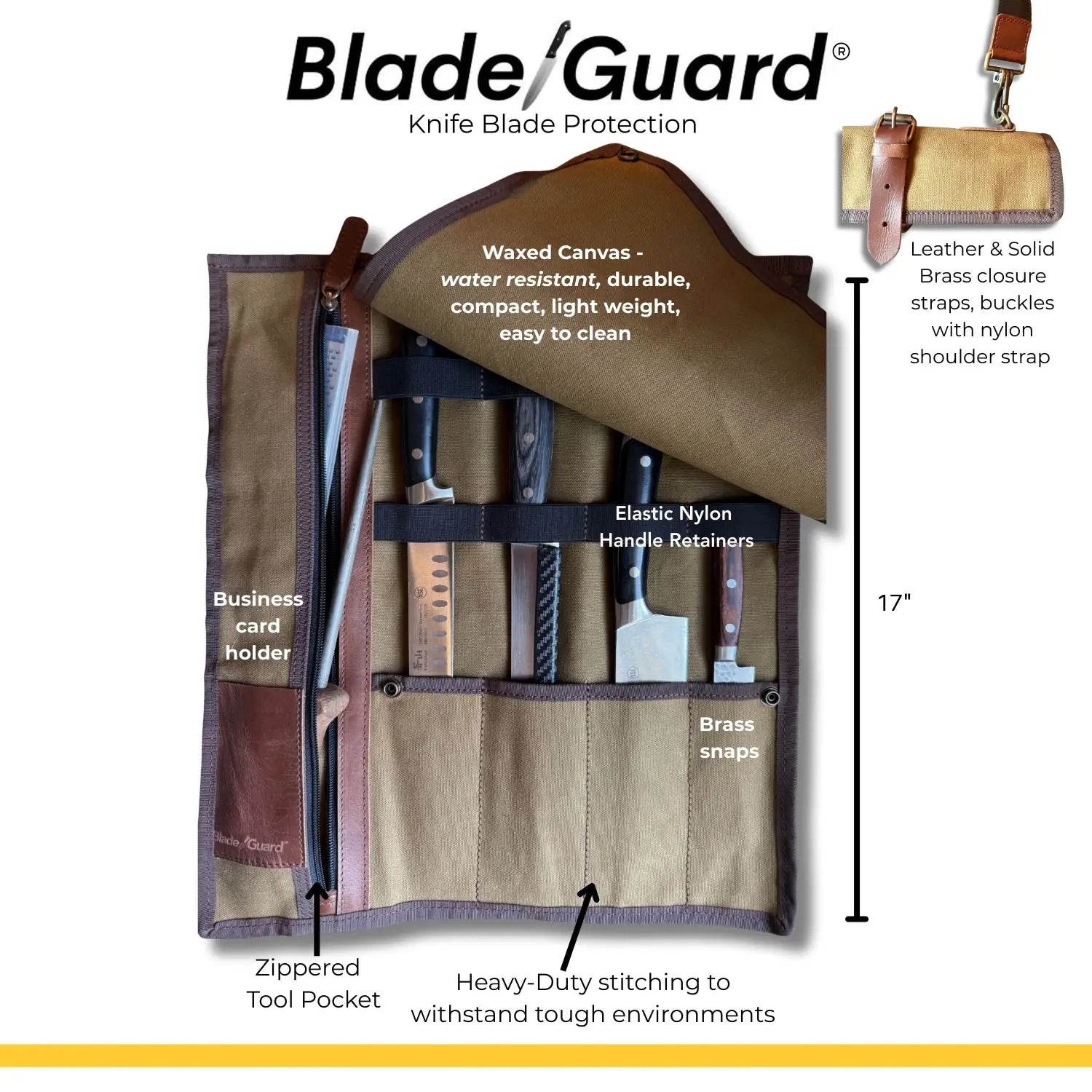
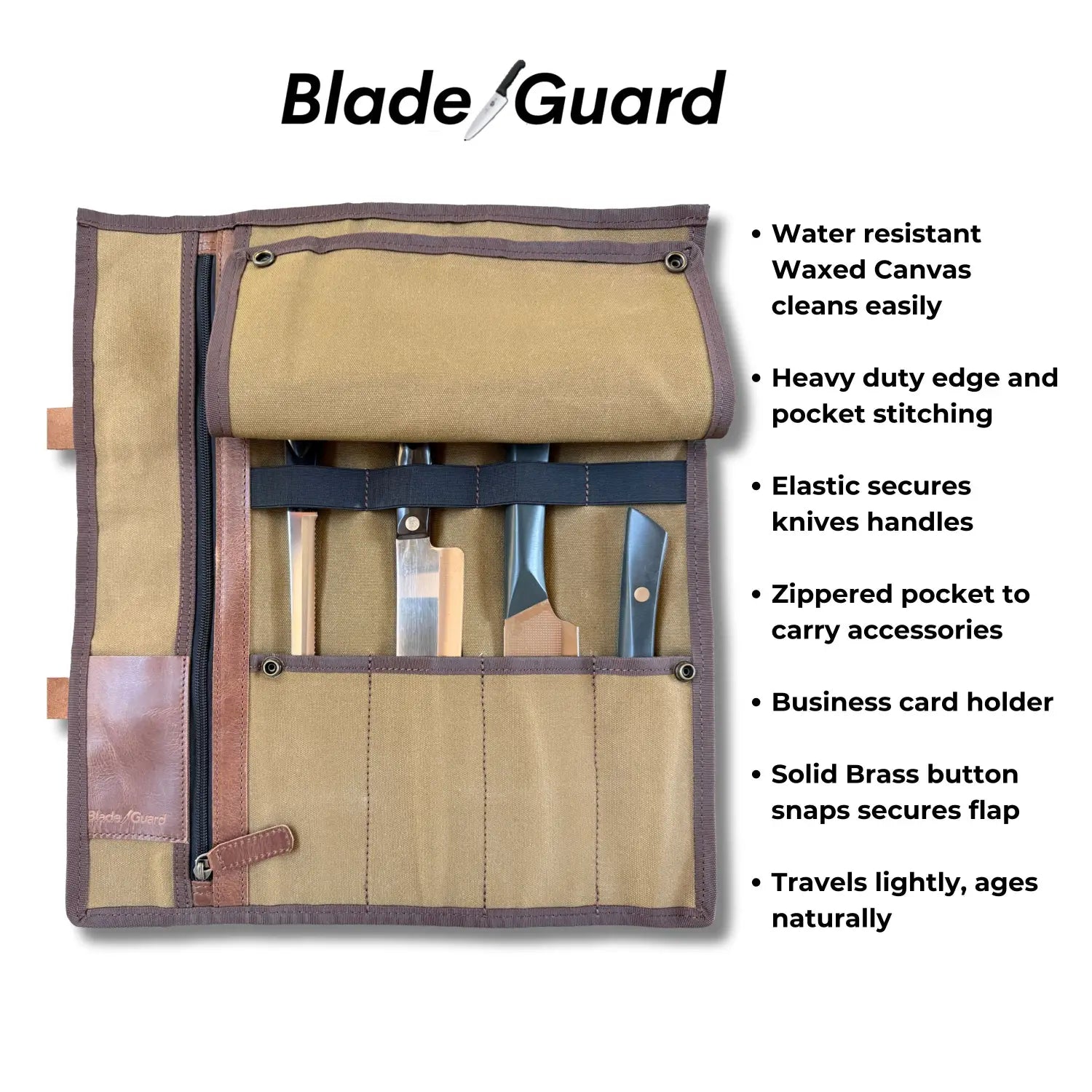
Knife rolls keep everything organized and secure. They often include pockets for honing rods, peelers, markers, and microplanes.
2. Protect Every Blade Individually
Even inside a roll, knives should never touch each other. That is where protective sleeves like Blade Guard™ make all the difference.
3. Keep Edges Sharp
Chefs often carry a honing rod or strop. But with protected blades, the edge stays sharper longer—reducing the need for constant maintenance.
4. Never Leave Knives in a Hot Car
Heat can damage adhesives, warp inferior steel, and dull edges.
5. Store Knives Vertically When Possible
Many chefs store their rolls upright when traveling so blades don’t settle on their edges.
Professional Chefs vs. Home Cooks: Why the Habit Matters at Every Level
You don’t need to be a Michelin-starred chef to benefit from traveling with your own knives—or simply protecting them inside your home kitchen.
Homeowners & Home Cooks
-
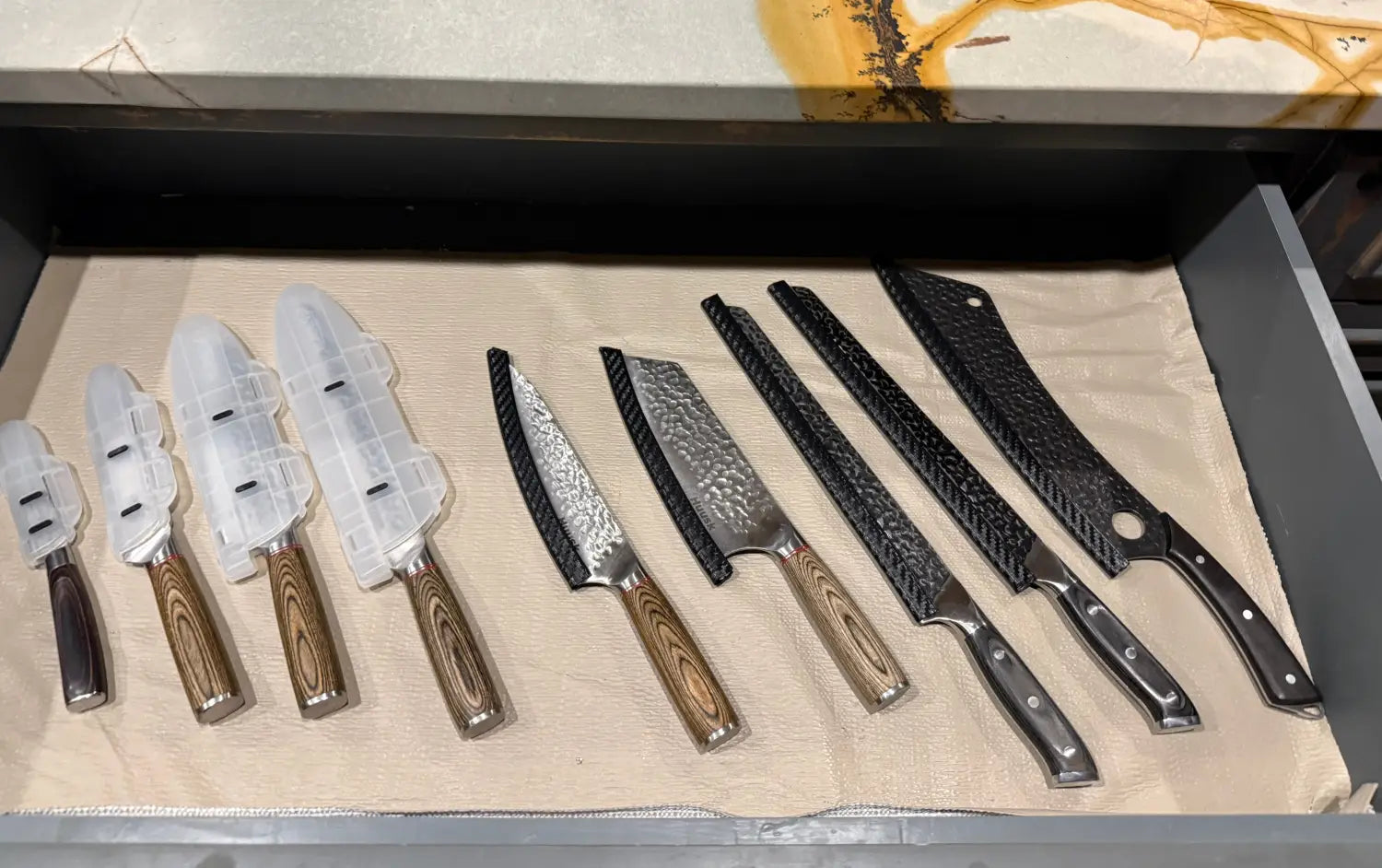
Protect expensive knives from damage in drawers
-
Keep blades safer around kids
-
Reduce dulling from accidental friction
-
Make at-home prep easier and more enjoyable
Culinary Students
-
Build professional habits early
-
Protect the knives that will define their career
-
Avoid accidental injuries in shared dorm kitchens
Light Pros: Caterers, Installers, Event Chefs
-
Safely transport knives between jobs
-
Maintain a consistent workflow regardless of the location
-
Present a more polished, professional image
How Blade Guard™ Fits Into the Modern Kitchen
FLI Products designed Blade Guard™ to look modern, sleek, and unobtrusive—something you’d expect from a professional-grade kitchen accessory. It pairs naturally with other FLI innovations such as:
-
The Cordsafe™ for securing cables safely
-
The Flex Strainer™ for improving sink usability and preventing clogging
Professional-grade tools are only as good as the protection around them. Blade Guard™ helps ensure your knives remain sharp, safe, and ready—no matter where your next meal is prepared.
Choosing the Right Blade Guard™ Size
Each Blade Guard™ size fits different knife shapes:
Small
-
Paring knives
-
Utility knives
Medium
-
Santokus
-
Small chef knives
Large
-
Full-size chef knives (8"–10")
-
Gyutos
-
Slicers
Chefs often buy 3–5 guards at a time to outfit their entire kit.
FAQ: Chef Knife Travel, Protection & Blade Guard™
Why do professional chefs insist on carrying their own knives?
Because familiar knives ensure precision, consistency, and safety across any kitchen. Personal tools match a chef’s grip, balance, and workflow far better than borrowed knives.
Do I need Blade Guard™ if I already use a knife roll?
Yes. Knife rolls prevent movement, but Blade Guard™ prevents contact—which is what causes chips, dulling, and injuries.
Can home cooks use Blade Guard™?
Absolutely. Blade Guard™ is one of the easiest ways to keep your knives safe in drawers and protect hands when reaching for utensils.
What’s the safest way to wash and dry knives before storing them?
Handwash only, wipe dry immediately, and place inside a Blade Guard™ before storing. Proper care can extend a knife’s life by years.
Is Blade Guard™ compatible with other FLI products?
Yes—many chefs pair Blade Guard™ with accessories like Cordsafe™ and use Flex Strainer™ to keep busy kitchen sinks clean, free-flowing, and safer during prep.
Upgrade Your Kitchen With Flex Strainer™
Whether you’re a seasoned chef or a passionate home cook, the right tools—and the right protection—make all the difference. While you explore the Blade Guard™ collection, don’t forget to elevate your sink setup with the Flex Strainer™, a simple upgrade that prevents clogs, speeds cleanup, and keeps your kitchen running smoothly.
You can find Flex Strainer™ at major retailers like Walmart, Wayfair, Amazon, and Lowe’s, or directly through FLI Products.
Upgrade your kitchen today—small tools, big impact.