

Content Outline
-
Introduction: Why the Ulu Knife Still Matters
-
What Is an ULU Knife? (Definition & Cultural Significance)
-
The Origins of the ULUKnife
-
Indigenous Arctic cultures
-
Materials and early craftsmanship
-
-
How the ULUKnife Works (Step-by-Step Use)
-
From Arctic Tool to Modern Kitchen Staple
-
Current Uses of the ULU Knife Today
-
Home kitchens
-
Outdoor and utility applications
-
-
Common Problems with Ulu Knife Storage
-
Solution: Protecting Curved Blades the Right Way
-
Product Profile: ULU Knife Blade Cover
-
Pros & Cons of Using an Ulu Knife
-
Ulu Knife vs. Traditional Chef’s Knife (Comparison Table)
-
Buyer’s Guide: Choosing the Right ULU Knife Accessories
-
Scenario-Based Uses
-
For home cooks
-
For outdoor enthusiasts
-
For gift buyers
-
-
Expert Tips for Care, Storage, and Longevity
-
FAQ Section
-
Closing Thoughts
Why the ULU Knife Still Matters
Few kitchen tools carry the cultural weight, functional efficiency, and enduring relevance of the ULU knife. With its unmistakable curved blade and deep roots in Indigenous Arctic cultures, the ULU has survived centuries of technological change—remaining not just relevant, but beloved. Today, it appears in modern kitchens, outdoor kits, and specialty cookware collections, prized for its efficiency and versatility.
Understanding the history of the ULU knife helps explain why it performs so well—and why proper storage and protection, especially for its unique blade shape, matter more than ever.
What Is an ULU Knife?
An ULU knife is a crescent-shaped cutting tool traditionally used by Indigenous peoples of Alaska, Northern Canada, and Greenland. Unlike straight-bladed knives, the ULU’s curved edge allows for a rocking motion powered by the wrist and shoulder, reducing strain while increasing control.
Why it matters:
-
It represents thousands of years of practical design evolution
-
It was historically essential for food prep, skinning, sewing, and childcare
-
Its ergonomic motion is still beneficial for modern cooks
The ULU isn’t a novelty—it’s a proven design refined by necessity. 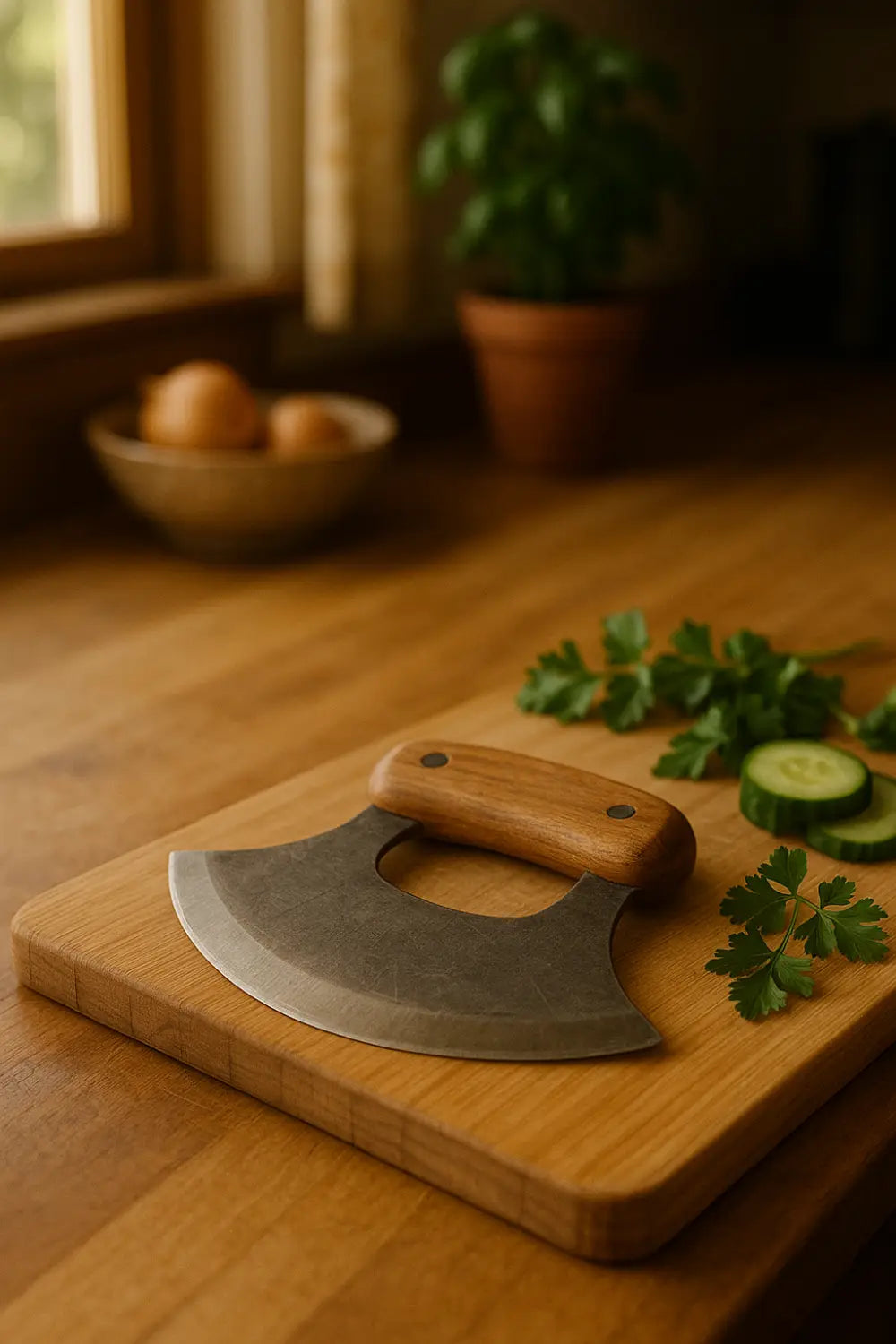 f
f
The Origins of the ULU Knife
Indigenous Arctic Cultures
The ULU dates back over 2,500 years, primarily associated with Inuit, Yupik, and Aleut cultures. Traditionally, it was considered a woman’s knife, central to daily life—used for preparing food, cutting hides, shaping materials, and even trimming hair.
Early blades were crafted from:
-
Slate
-
Bone
-
Copper
-
Meteoric iron (in rare cases)
Handles were often made from driftwood, antler, or bone, shaped to fit the user’s hand perfectly.
Craftsmanship and Design Evolution
The curved blade wasn’t decorative—it distributed force evenly and allowed precise control without requiring brute strength. This made it ideal for repetitive tasks in harsh environments.
How the ULU Knife Works (Step-by-Step Use)
The Ulu’s motion differs from standard knives, making it especially efficient:
-
Grip the handle firmly, keeping your wrist straight
-
Rock the blade forward and back, using shoulder movement
-
Apply downward pressure evenly, letting the curve do the work
-
Use the full blade edge for consistent cuts
-
Lift minimally, improving speed and control
This motion reduces fatigue and improves accuracy—especially for chopping herbs, vegetables, and meats.
From Arctic Tool to Modern Kitchen Staple
As culinary enthusiasts rediscovered traditional tools, the Ulu gained popularity outside Indigenous communities. Today, it’s used by:
-
Home cooks seeking ergonomic tools
-
Chefs looking for efficient prep knives
-
Outdoor enthusiasts for camp food prep
Its ability to handle repetitive chopping makes it ideal for people with wrist or hand strain.
Current Uses of the ULU Knife Today
In the Kitchen
-
Chopping vegetables and herbs
-
Cutting pizza and flatbreads
-
Portioning meat and fish
Outdoor & Utility Use
-
Camp food prep
-
Leather and hide trimming
-
General utility cutting
Common Problems with ULU Knife Storage
Despite its usefulness, the ULU presents storage challenges:
Problem:
-
Curved blades don’t fit standard knife blocks
-
Exposed edges increase risk of cuts
-
Drawers dull blades and cause accidents
Solution: Protecting Curved Blades the Right Way
The safest solution is a dedicated blade cover designed for the Ulu’s unique shape.
Product Profile: ULU Knife Blade Cover
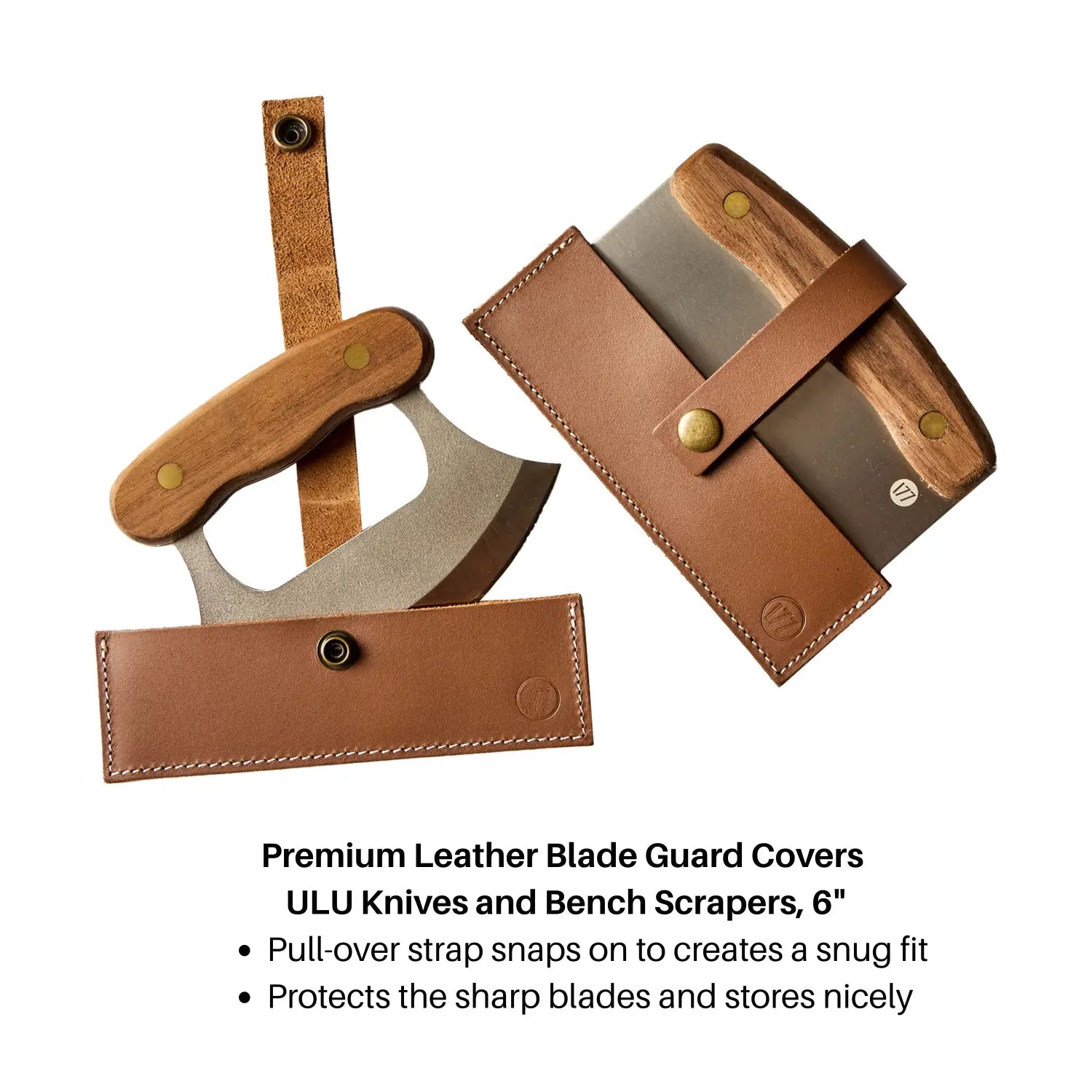
Designed specifically for 6" ULU knives and 6" bench scrapers, the ULU Knife Blade Cover from FLI Products offers practical, long-term protection.
Key benefits include:
-
Secure pull-over snap strap for safe storage and travel
-
Premium leather construction for durability
-
Reinforced stitching for long-term use
-
Ideal for kitchens, camping, and utility kits
Available through Amazon, Walmart, Wayfair, Tractor Supply, and directly via FLI Products:
ULU Knife Blade Cover
Pros & Cons of Using an ULU Knife
Pros
-
Ergonomic, low-strain cutting motion
-
Excellent control and efficiency
-
Multi-purpose functionality
-
Cultural and historical significance
Cons
-
Requires storage planning
-
Learning curve for new users
-
Limited compatibility with standard accessories
ULU Knife vs. Traditional Chef’s Knife
| Feature | Ulu Knife | Chef’s Knife |
|---|---|---|
| Blade Shape | Curved | Straight |
| Motion | Rocking | Slicing |
| Ergonomics | High | Moderate |
| Storage Needs | Specialized | Standard |
| Cultural Heritage | Yes | No |
Buyer’s Guide: Choosing the Right ULU Knife Accessories
When selecting accessories, consider:
-
Blade size compatibility (6" is standard)
-
Secure fastening (snaps or straps)
-
Material durability (leather outperforms synthetics)
-
Travel safety
Accessories like leather blade covers extend blade life and reduce accidents.
Scenario-Based Uses
For Home Cooks
An Ulu simplifies prep work and pairs well with safe drawer storage when protected.
For Outdoor Enthusiasts
A covered ULU travels safely in packs and camp kits.
For Gift Buyers
Paired with a blade cover, an ULU makes a thoughtful, functional gift.
Expert Tips for Care, Storage, and Longevity
-
Always dry the blade before covering
-
Store flat in a drawer with a blade guard
-
Avoid loose drawer storage without protection
-
Condition leather covers occasionally
Frequently Asked Questions (FAQ)
Q: What is an ULU knife best used for?
A: Chopping vegetables, herbs, meats, and general food prep using a rocking motion.
Q: Are ULU knives safe for beginners?
A: Yes, especially when paired with proper storage like a blade cover.
Q: How do you store an ULU knife safely?
A: Use a dedicated blade cover designed for curved blades.
Q: Can an ULU knife replace a chef’s knife?
A: For many tasks, yes—especially chopping—but it complements rather than replaces.
Q: Why use leather blade covers instead of plastic?
A: Leather offers better durability, blade protection, and longevity.
The ULU knife’s journey from ancient Arctic communities to modern kitchens proves that good design never goes out of style. With proper use and thoughtful storage, this iconic tool can serve generations of cooks safely and effectively. Explore the ULU Knife Blade Cover from FLI Products to protect your blade and enjoy the best of tradition—available at FLI Products and major retailers nationwide.


Leave a comment